 Siraj Al Din Academy
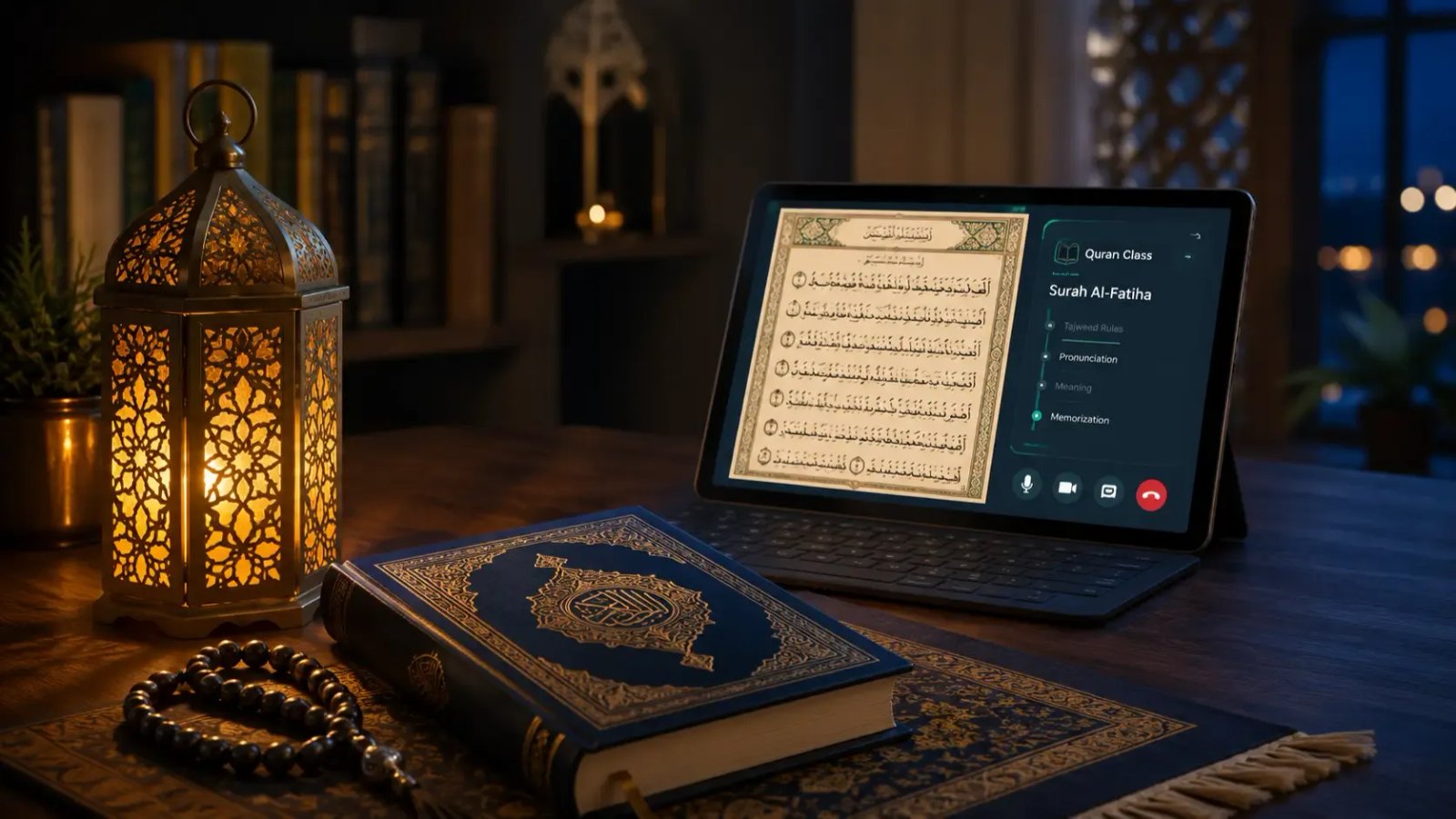
Learning the Quran is one of the most important goals for many Muslim families around the world. For beginners, the first step can sometimes feel difficult, especially when the student does not know Arabic letters, struggles with pronunciation, or does not have access to a qualified Quran teacher nearby. This is why online Quran classes have become a practical and effective option for children, adults, and non-native Arabic speakers.
Online Quran learning gives students the chance to study from home, follow a clear plan, receive personal correction, and progress step by step with a teacher who understands their level. Whether the goal is reading the Quran correctly, improving recitation, learning Tajweed, memorizing short surahs, or building a regular Islamic learning routine, online classes can make the journey easier and more consistent.
At Siraj Al Din Academy, the focus is not only on giving lessons. The goal is to help every student start from the right level, learn with patience, and continue with a structured plan that fits their age, ability, and schedule.
What Are Online Quran Classes?
Online Quran classes are live lessons between a student and a qualified teacher through the internet. The student usually joins the class from home using a phone, tablet, or computer. During the lesson, the teacher listens, corrects mistakes, explains rules, and guides the student according to their level.
For beginners, online Quran classes may include learning Arabic letters, correct pronunciation, basic reading, short surahs, simple Tajweed rules, and daily practice. For children, the lessons are usually slower, more patient, and more interactive. For adults, the plan may focus on reading fluency, correcting old mistakes, and building confidence in recitation.
The best online Quran classes are not random sessions. They follow a learning path. A beginner should not be pushed too fast. The teacher should first understand the student’s current ability, then move gradually from letters to words, from words to verses, and from verses to confident recitation.
Who Can Join Online Quran Classes?
Online Quran classes are suitable for many types of students. Young children can start by learning Arabic letters, short surahs, and basic Islamic manners. Older children can improve reading, memorization, and Tajweed. Teenagers can build a stronger connection with the Quran through regular recitation and revision. Adults can restart their Quran journey even if they stopped learning for many years.
They are also very helpful for Muslim families living in Europe, the UK, the US, Canada, Australia, and other countries where finding a local Quran teacher may be difficult. Many parents want their children to learn the Quran, but they also need flexible times because of school, work, and different time zones. Online learning makes this easier.
Non-native Arabic speakers can also benefit greatly. They may need more support with pronunciation, Arabic letters, Makharij, and reading confidence. A patient teacher can help them build the basics without embarrassment or pressure.
Why Beginners Need a Structured Quran Learning Plan
A beginner should never start Quran learning without a clear plan. Without structure, the student may jump between lessons, forget previous rules, or feel that progress is slow. A good plan gives the student a clear path and helps the teacher measure improvement.
The first stage is usually recognizing Arabic letters and sounds. This is especially important for children and non-native speakers. If the student cannot identify the letters correctly, reading Quranic words will be difficult.
The second stage is joining letters and reading simple words. At this stage, the teacher should correct pronunciation carefully and repeat examples until the student becomes comfortable.
The third stage is reading short verses and small surahs. Here, the student begins to feel real progress. The teacher can introduce simple Tajweed rules slowly, such as elongation, clear pronunciation, and stopping correctly.
The fourth stage is regular recitation and revision. Consistency is very important. Even a short lesson repeated every week can make a big difference when the student practices between classes.
Benefits of Online Quran Classes for Kids
Children need a special teaching method. They learn better when the lesson is simple, encouraging, and not too long. Online Quran classes for kids can be very effective when the teacher is patient and understands how to deal with young learners.
One major benefit is personal attention. In a one-on-one class, the teacher can focus only on the child. This makes it easier to correct mistakes immediately and adjust the speed of the lesson.
Another benefit is comfort. The child learns from home, which can reduce stress and help the student feel safe. Parents can also follow the lesson, check progress, and communicate with the academy about the child’s needs.
Online classes also help with consistency. Instead of depending on travel, weather, or local availability, the student can attend from home at a fixed time. This makes it easier to build a weekly routine.
Benefits of Online Quran Classes for Adults
Many adults want to improve their Quran recitation but feel shy because they are beginners. Online Quran classes give adults a private and comfortable space to learn without pressure. The teacher can focus on the exact areas that need improvement, such as pronunciation, fluency, Tajweed, or memorization.
Adults often have busy schedules, so flexibility is important. Online classes allow them to choose times that fit work, family, and daily responsibilities. Some adults prefer early morning lessons, while others prefer evening classes.
Another advantage is personalized correction. Many adults have been reciting with small mistakes for years. A qualified teacher can identify these mistakes and help correct them gradually.
Tajweed for Beginners
Tajweed is the set of rules that helps Muslims recite the Quran correctly and beautifully. Beginners do not need to learn all Tajweed rules at once. In fact, learning too many rules too early can confuse the student.
A better method is to introduce Tajweed gradually. The teacher may begin with correct letter pronunciation, then teach basic rules through practice. For example, the student learns by reading and listening, not only by memorizing rule names.
Important beginner Tajweed topics include Makharij, Madd, Qalqalah, Noon Sakinah, Meem Sakinah, and proper stopping. These topics should be taught step by step according to the student’s ability.
The goal of Tajweed for beginners is not to make the lesson difficult. The goal is to protect the recitation from common mistakes and help the student read with confidence.
Quran Memorization for Beginners
Many students want to memorize the Quran, but memorization should be built on correct recitation. If a beginner memorizes with mistakes, those mistakes may become difficult to fix later. That is why the teacher should first make sure the student can read or repeat correctly.
For children, memorization can start with short surahs from Juz Amma. The teacher may divide each surah into small parts and repeat them with the student. Revision is very important. A student should not keep memorizing new parts while forgetting old ones.
For adults, memorization plans should match available time. Some students can memorize a few lines per week, while others may focus mainly on reading and revision. A good teacher will not pressure the student but will create a realistic plan.
The best memorization plan includes three parts: new memorization, correction, and revision. Without revision, memorization becomes weak.
How to Choose the Right Online Quran Teacher
Choosing the right teacher is one of the most important decisions. A good Quran teacher should be patient, clear, and able to correct mistakes gently. The teacher should also understand the student’s age and learning style.
For kids, the teacher must know how to keep the lesson simple and encouraging. Children may need repetition, short activities, and positive feedback.
For adults, the teacher should be respectful and supportive. Many adult beginners feel nervous, so the teacher should help them feel comfortable.
Parents should also look for communication and follow-up. It is important to know what the child learned, what needs practice, and how the student is progressing.
A free trial class is very useful because it allows the student and family to experience the teaching style before choosing a regular plan.
What Happens in a Free Trial Class?
A free trial class helps the academy understand the student’s level and goals. The teacher may ask the student to read a few letters, words, or verses. If the student is a complete beginner, the teacher may start with very simple basics.
The trial is not an exam. It is a level check. The goal is to know where the student should begin and which teacher, schedule, and course path will be most suitable.
After the trial, the family can receive a recommendation. This may include the best class duration, number of classes per week, suitable course, and learning focus.
A free trial is especially helpful for parents who are unsure whether their child needs Quran reading, Tajweed, memorization, or Arabic support.
How Often Should Beginners Take Quran Classes?
The best schedule depends on the student’s age, goal, and availability. Some beginners do well with two classes per week. Others may need three or more lessons if they want faster progress.
For children, shorter and consistent lessons are often better than long and irregular lessons. A child may benefit from 30-minute classes several times per week.
For adults, one or two focused lessons per week can be enough if the student practices between classes.
The key is consistency. A student who attends regularly and practices for a few minutes daily will usually progress better than a student who takes lessons without review.
Common Mistakes Beginners Make
One common mistake is rushing. Many students want to read quickly, but correct pronunciation comes first. Reading slowly with accuracy is better than reading fast with many mistakes.
Another mistake is ignoring revision. Quran learning needs repetition. Without revision, the student may forget letters, rules, or memorized surahs.
A third mistake is depending only on class time. The lesson is important, but practice between lessons makes the progress stronger.
Some beginners also feel discouraged when they make mistakes. Mistakes are normal. The purpose of the teacher is to correct them patiently until the student improves.
Why One-on-One Quran Classes Work Better for Beginners
One-on-one Quran classes are especially useful for beginners because every student has different needs. Some students struggle with letters. Others struggle with fluency. Some need Tajweed correction, while others need memorization support.
In a group class, the teacher may not have enough time to correct every mistake. In a one-on-one class, the teacher can listen carefully and adjust the lesson immediately.
This personal attention helps the student progress with more confidence. It also helps parents understand exactly how their child is doing.
Online Quran Classes for Muslim Families in Europe
Many Muslim families in Europe want their children to stay connected to the Quran and Islamic values while living in a busy environment. Online Quran classes can support this goal by giving families access to qualified teachers without depending on local availability.
Time zones, school schedules, and family routines can be managed more easily with flexible online lessons. Parents can choose suitable days and times, and children can learn from home.
For non-native Arabic-speaking families, online classes can also support Arabic reading and pronunciation. This is important because Quran recitation depends on correct Arabic sounds.
Best Learning Path at Siraj Al Din Academy
At Siraj Al Din Academy, students can start with a free trial, then move into the right course based on their level. A beginner may start with Quran reading basics. A student who already reads may move to Tajweed. A child interested in memorization may follow a memorization plan with revision. A non-native speaker may also need Arabic support.
Students and parents can explore related learning paths such as Online Quran Classes for Kids, Online Tajweed Course, Online Quran Memorization Course, Arabic Classes for Non-Native Speakers, and Female Quran Teacher Online.
The goal is to make learning simple, structured, and suitable for each student.
Final Advice for Beginners
Starting Quran learning is a beautiful step, but it should be done with patience and consistency. Beginners do not need to feel worried or embarrassed. Every strong reciter started with small steps.
The most important things are choosing a qualified teacher, following a clear plan, practicing regularly, and staying consistent. Online Quran classes can make this easier for kids, adults, and non-native Arabic speakers by providing flexible lessons and personal guidance.
If you or your child want to begin learning the Quran online, the best first step is to book a free trial class. This helps identify the current level and choose the most suitable learning plan.
Frequently Asked Questions
Are online Quran classes suitable for complete beginners?
Yes. Online Quran classes are suitable for complete beginners, including children, adults, and non-native Arabic speakers. The teacher can start from Arabic letters, pronunciation, and basic reading.
Can my child learn Quran online?
Yes. Children can learn Quran online when the lessons are simple, patient, and age-appropriate. One-on-one classes help the teacher focus on the child’s level and mistakes.
Do beginners need Tajweed from the first lesson?
Beginners do not need advanced Tajweed from the first lesson. However, correct pronunciation and simple Tajweed rules should be introduced gradually through practice.
How long does it take to read the Quran fluently?
The time depends on the student’s age, level, number of classes, and practice. With regular lessons and revision, beginners can make steady progress step by step.
Can adults start Quran classes even if they never learned before?
Yes. Adults can start at any age. Online Quran classes provide a private and supportive environment where adults can learn without pressure.
How can I book a free trial?
You can book a free trial through the Free Trial page on Siraj Al Din Academy or contact the academy through WhatsApp for help choosing the right teacher and schedule.