 Siraj Al Din Academy
1. What do children learn in Islamic Studies classes?
Children can learn Aqeedah, the pillars of Islam and Iman, Salah, Wudu, Seerah, daily duas, Islamic manners, and other essential Islamic knowledge.
Help your child build strong Islamic knowledge through live one-to-one lessons in Aqeedah, Salah, Seerah, manners, and everyday Islamic practice.

The Online Islamic Studies for Kids course is designed to help children understand the essential teachings of Islam in a simple, structured, and age-appropriate way. Through live one-to-one lessons, students learn core Islamic beliefs, worship, character, Seerah, and practical Islamic knowledge they can use in everyday life.
Lessons are personalized according to the child's age, current knowledge, and learning ability, allowing the teacher to explain concepts clearly and answer questions directly.
The course can include:
Children learn the basic beliefs of Islam in language they can understand. The teacher introduces belief in Allah, His names and attributes in an age-appropriate way, the angels, the revealed books, the Prophets, the Last Day, and belief in divine decree.
The goal is to help children understand what Muslims believe and why faith matters in everyday life.
Students study the five pillars of Islam and gradually learn the meaning and importance of the Shahadah, Salah, Zakah, fasting in Ramadan, and Hajj.
Lessons focus on understanding rather than memorizing information without context.
Children learn how to prepare for prayer, perform Wudu, understand the basic conditions of Salah, and follow the correct order of the prayer.
Teachers explain each step gradually and can repeat practical points until the child feels confident.
The Seerah is taught through meaningful stories that help children understand the life, character, patience, mercy, and teachings of Prophet Muhammad ﷺ.
Instead of presenting history as disconnected facts, lessons highlight practical lessons children can apply in their own lives.
A major part of Islamic education is developing good character. Children learn about honesty, kindness, patience, gratitude, respect, responsibility, keeping promises, and treating parents and others well.
Teachers connect these values to everyday situations at home, school, and with friends.
Students can learn important daily duas and simple Islamic practices connected to waking up, eating, sleeping, entering and leaving the home, and other common situations.
The purpose is to help Islamic knowledge become part of the child's daily routine.
Lessons are delivered live through one-to-one online sessions. This gives the teacher the opportunity to adapt explanations, ask questions, review previous lessons, and make sure the child truly understands the topic.
The teacher can also adjust the lesson pace according to the child's age, attention span, and progress.
Younger children may begin with simple concepts, stories, manners, and basic worship, while older students can study Aqeedah, Fiqh, Seerah, and Islamic responsibilities in greater depth.
The learning plan is adjusted according to the student's level rather than forcing every child into the same curriculum.
Families who want a broader Quran program can also explore our Online Quran Classes for Kids.
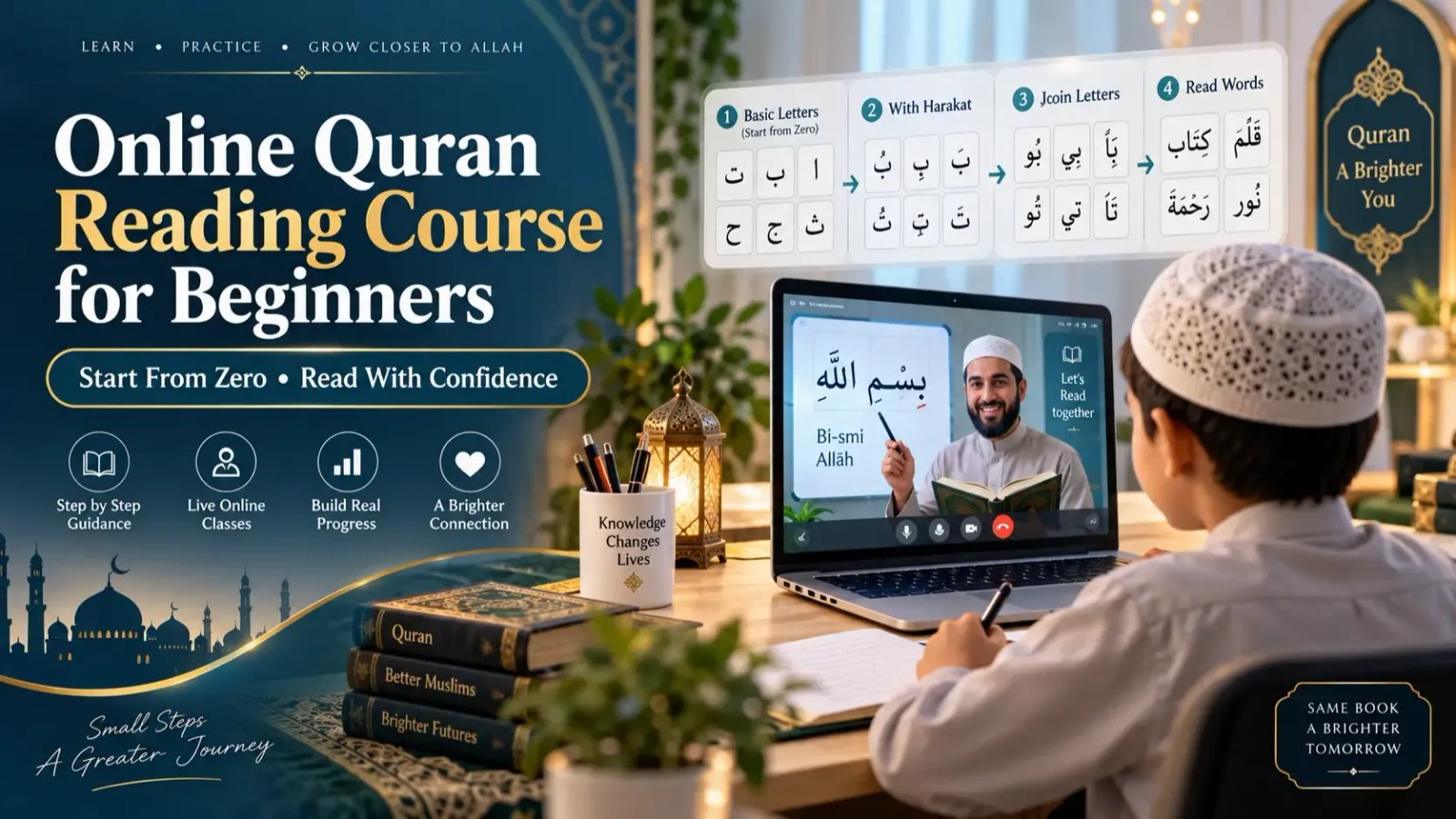
Children who need to improve their Quran reading from the beginning can join our Online Quran Reading Course for Beginners.
Students who want to improve recitation can continue with our Online Tajweed Course.
Parents can follow their child's progress through teacher feedback and clear learning goals. The teacher can recommend what to review between lessons and what topics should be studied next.
Online lessons allow children to study Islamic knowledge from home while receiving direct guidance from a teacher.
Flexible scheduling makes the course suitable for families in the USA, UK, Canada, Europe, Australia, and other countries.
Book a free trial class so we can understand your child's age, current Islamic knowledge, and learning goals, then recommend a suitable study plan.
Children can learn Aqeedah, the pillars of Islam and Iman, Salah, Wudu, Seerah, daily duas, Islamic manners, and other essential Islamic knowledge.
Yes. Lessons are delivered live one-to-one so the teacher can adapt the explanation and learning pace to the child's age and level.
Children can begin at a young age with simple Islamic concepts, stories, manners, and basic worship, then progress to more detailed topics as they grow.
Yes. Children learn the foundations of Islamic belief in a simple and age-appropriate way, including the pillars of Iman and belief in Allah.
Yes. The course can include practical lessons on Wudu, the basic conditions of Salah, and the correct order of the prayer.
Yes. Students learn important events and lessons from the life of Prophet Muhammad ﷺ with a focus on character, mercy, patience, and practical lessons.
Yes. Families can combine Islamic Studies with Quran reading, Tajweed, or Quran classes for kids depending on the child's learning goals.
Yes. You can book a free trial class so we can assess your child's level and recommend a suitable Islamic Studies learning plan.
Compare other Quran and Arabic learning paths offered by Siraj Al Din Academy.